Category: Typology

  • SEC Circular To Capital Market Operators On Transmutation Of Independent Non-Executive Directors and Tenure of Directors

    SEC Circular To Capital Market Operators On Transmutation Of Independent Non-Executive Directors and Tenure of Directors

    SEC CIRCULAR TO CAPITAL MARKET OPERATORS ON TRANSMUTATION OF INDEPENDENT NON-EXECUTIVE DIRECTORS AND TENURE OF DIRECTORS 

    SEC Independent Director Transmutation

    On 19 June 2025, the  Securities and Exchange Commission (SEC) released a circular announcing significant changes for Public Companies and other significant public interest capital market operators. The circular prohibits the conversion of Independent Non-Executive Directors (INEDs) into Executive Directors (including the CEO position) within the same company or its group structure. Additionally, the SEC has revised the tenure limits for directors of Significant Public Interest Capital Market Operators. 

    UNDERSTANDING THE SEC’S RATIONALE

    The SEC’s decision aligns with Principle 7 of the Nigerian Code of Corporate Governance, which emphasizes the high level of objectivity INEDs bring to a Board, crucial for maintaining stakeholder trust. Typically, an INED should not have an interest, hold shares (in excess of 0.01% of paid-up capital), or represent a shareholder in a way that could compromise their impartial judgment. Furthermore, an INED  must not be is not directly affiliated with the company as an employee, director, business partner, professional, or a relative of a company affiliate.

    In contrast, an Executive Director holds a contractual relationship with the company, directly supporting the Managing Director/Chief Executive Officer in the company’s operations and management. While an Executive Director’s loyalty is to the company itself, an INED’s loyalty extends to the company’s broader stakeholders, such as the government and business partners.

    These measures are designed to ensure that INEDs serve as strong, independent voices on the board, free from bias or prejudice.

    Revised Tenure for Directors of Significant Public Interest Capital Market Operators

    Under its powers in Section 355(r)(iv) of the Investments and Securities Act (ISA) 2025, the SEC has capped the tenure of directors in significant public interest capital market operators. Directors are now limited to 10 consecutive years within the same company and a total of 12 consecutive years within the same group structure.

    The circular also mandates a three-year “cool-off” period for any Chief Executive Officer or Executive Director who steps down after serving 10 or 12 consecutive years. Only after this period can they be appointed as chairman, for a maximum four-year tenure. 

    When calculating these years, any previously served tenure by the appointees must be included.

    These new regulations are effective immediately, and compliance is mandatory.
  • UI SPOOFING

    UI SPOOFING

    WHAT IS UI SPOOFING

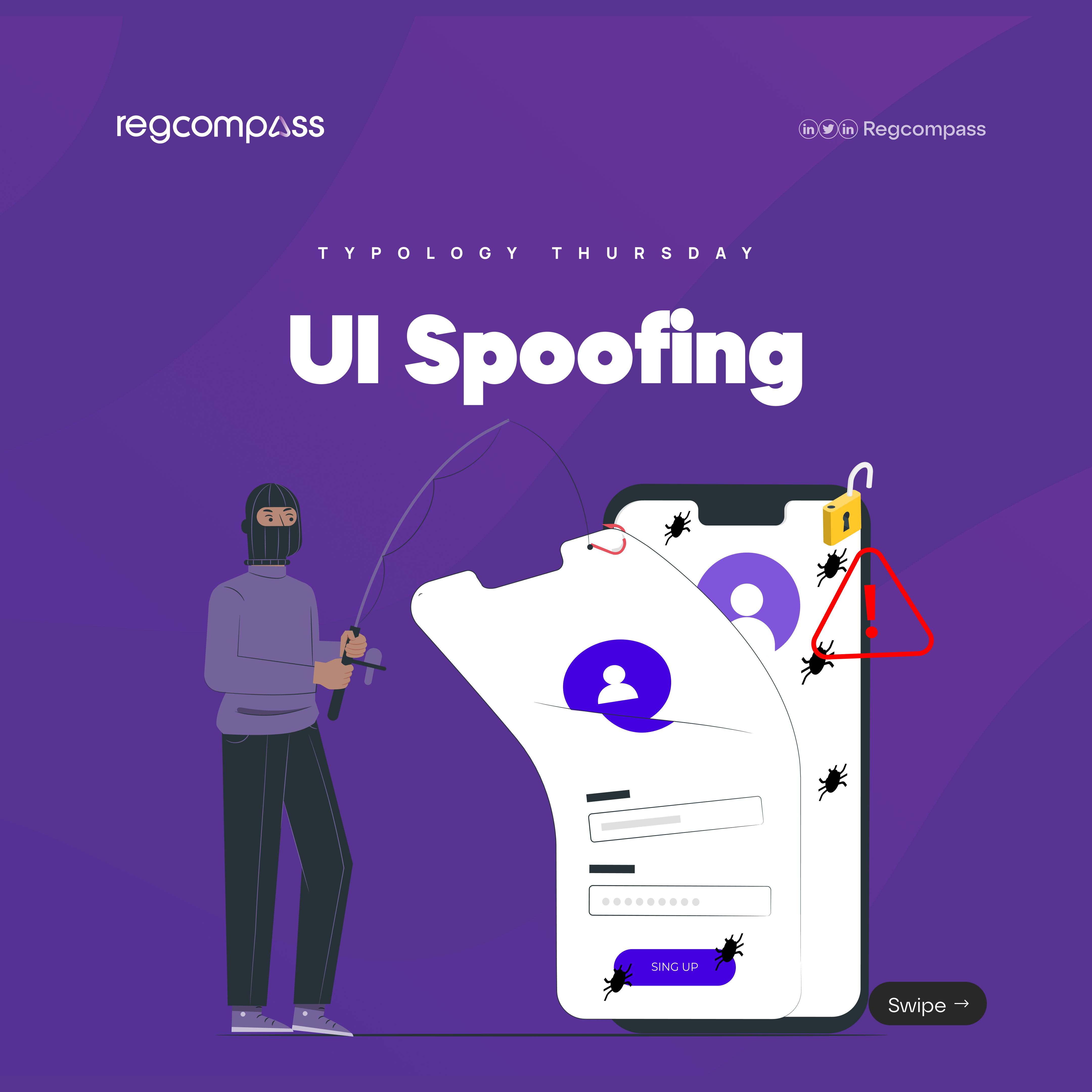
    UI spoofing, or User Interface spoofing, is a cyberattack where malicious actors manipulate a user interface’s visual elements to deceive users, tricking them into actions they wouldn’t normally perform. This manipulation is designed to elicit sensitive information, such as login credentials, financial details, or personal data; induce clicks on malicious links that lead to malware downloads or phishing websites; and authorize unauthorized transactions by mimicking legitimate transaction screens.

    How UI Spoofing Works:

    1. Mimicking Legitimate Interfaces:
      In the context of cybersecurity, cybercriminals use fake UIs, mimicking trusted platforms, for spoofing and phishing.
    2. Deceptive Overlays:
      Deceptive overlays trick users by placing a fake, often hidden layer over a real app’s UI, leading them to interact with the fake instead. Common types include clickjacking, fake logins, overlay captchas, and imposter alerts.
    3. Manipulating Visual Cues:
      Visual cue manipulation deceives users by altering or creating misleading visual elements, like fake icons or warnings. For example, they might make a malicious file look like a harmless image or display a fake security warning to scare users into taking action.
    4. Exploiting User Trust: 
      Is a manipulation tactic used by cybercriminals and other malicious actors to deceive individuals by leveraging their inherent trust in familiar systems, people or situations.Essentially, it’s a form of social engineering that targets human psychology rather than technical vulnerabilities.

    Ways to Prevent UI Spoofing:

    1. By securing all communications with HTTPS and forming an encrypted tunnel that protects against data alteration.
    2. Make sure you have a consistent design and layout across your site that enables you to identify any discrepancies suggesting a spoofed interface.
    3. Implementing a multi-factor authentication(MFA) and having multiple forms of verification is important.
    4. Before providing credentials you should always  verify the website’s URL to ensure they are not on a spoofed site.
    5. Website owners should monitor networks for unusual activity to detect and prevent potential UI spoofing attempts.
    6. Have a secure anti robust security system to protect and prevent any form of UI spoofing.
    7. Implementation of strict permission management is important to have in order to reduce the risk of UI spoofing and ensure interface security.