The Ultimate Guide to Credit Guarantee Companies in Nigeria: New CBN Rules.
Introduction
As Nigeria attempts to move forward from the economic recession and the increased unemployment brought by Covid-19, improving the financing of Micro, Small and Medium Enterprises (MSMEs) is crucial. MSMEs (not large enterprises) are the major drivers of growth contributing almost half of Nigeria’s Gross Domestic Product (GDP) and employing over 80 % of the population. Sadly, many MSMEs suffer financial exclusion and generally find it difficult to obtain loans. This is mainly because many lenders consider the credit risk associated with MSMEs to be too high.
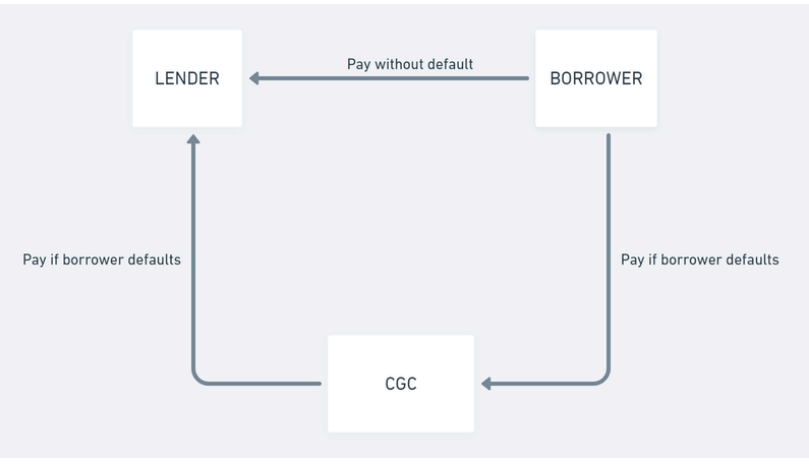
However, one way for a lender to manage the credit risk of granting an MSME loan is through a credit guarantee scheme. Under a credit guarantee scheme, a third-party, such as a credit guarantee company (“CGC”), guarantees the loan and bears some or all the lender’s loss if the borrower fails to pay, in exchange for a fee.
How A Credit Guarantee Scheme Works
Advantages of a Credit Guarantee Scheme
For the lender, the obvious advantage of a credit guarantee scheme is that it reduces the risk of losing the credit if the borrower does not pay. In addition, a credit guarantee scheme avoids the costs and time that the lender would have incurred to profile the MSME’s business, examine their transaction history, their spending patterns and so on. The CGC will be responsible for these activities and their costs. For the MSME borrower, there is easier access to credit to grow the business.
CBN Exposure Draft on Regulation and Supervision of Credit Guarantee Companies (CGCS) (“the Guidelines”)
The CBN has recognised the important role of guarantee schemes in facilitating credit. Hence, it released the Guidelines to regulate and supervise the activities of CGCS in Nigeria. The Guidelines mainly provide minimum standards for CGCs. However, the Guidelines also cover Participating Financial Institutions (PFIs) who are the actual lenders to the MSMEs. They are required to comply with relevant provisions of the Guidelines. The Guidelines also contemplate the MSMEs that may apply and obtain guarantees from a CBN-licensed CGC.
KEY PROVISIONS OF THE GUIDELINES
Definition of Credit Guarantee Companies
According to the Guidelines, a CGC is an institution licensed by the CBN with the primary objective of providing guarantees to banks and other lending financial institutions against the risk of default by obligors.
Powers and Duties of the CBN
The CBN has the power to generally regulate and supervise CGCs and it can grant or revoke a CGC’s licence. The CBN also has the power to determine a CGC’s minimum capital requirements. In addition, the CBN approves the appointment of and removal of the board members, senior management staff and external auditors of a CGC.
Licensing Procedure and Requirements
In order to secure a license, the promoters of a CGC have to submit a formal application addressed to the Governor of the CBN in writing. The license may be granted in two stages: first, as an Approval-in-Principle (AIP) and, second, as a final license.
Approval-in-Principle (AIP)
To obtain an AIP, the promoters of the CGC must pay a non-refundable application fee of N100,000 (One Hundred Thousand Naira) and deposit the specified minimum paid-up capital requirement of N10,000,000,000.00 (Ten Billion Naira only) into an account specified by the CBN.
Further documents to accompany the application include the evidence of capital contribution made by each shareholder; evidence of name reservation with the Corporate Affairs Commission(CAC), a detailed business plan or feasibility report, Memorandum and Articles of Association, shareholder agreement, statement of intent and detailed manuals and policies.
Corporate investors must submit a Certificate of Incorporation and Certified True Copy (CTC) of other incorporation documents, a board resolution supporting the investment in the CGC; the names and address of the owners, directors and their related companies; and the audited financial statements.
Where CBN is satisfied with the application, it may issue Approval-in-Principle to the promoters of the CGC communicating its decision to the promoters within 90 days of the receipt of the application.
The proposed CGC shall not register or incorporate its name with the Corporate Affairs Commission until an Approval-in-Principle has been obtained from the CBN.
Final License
The promoters of a proposed CGC have to submit an application for the grant of a final license not later than six (6) months after the grant of the AIP. Some of the requirements for the final license include a non-refundable licensing fee of N1,000,000.00 (One Million Naira), Certified True Copy (CTC) of Certificate of Incorporation of the CGC; a CTC of MEMART; a CTC of Form CAC 1.1(application for registration of company); and evidence of payment of Stamp Duties etc.
The CBN has a duty to inspect the premises and facilities of the proposed CGC before it grants a final licence to the CGC.
Corporate Governance Requirements
The Guidelines contain standard and detailed corporate governance requirements for a CGC. The Board of a CGC is responsible for its affairs, its performance and strategy. The Board must have between five (5) to seven (7) directors with at least one of the directors having banking or related financial industry experience.
The Board of directors should have a mix of both executive and non-executive directors but the number of non-executive directors should be greater than that of executive directors. The appointment of the members of the Board is subject to CBN’s approval.
As is common with standard corporate governance requirements, the Guidelines require the positions of Managing Director and Chief Executive Officer to be kept separate and occupied by different individuals.
An appraisal of the Board is to be conducted on an annual basis by an independent consultant on aspects of the Board’s structure, composition, responsibilities and performance.
Compliance, Sanctions, and Revocation of Licence
CGCs are required to comply with all laws, rules and regulations. They are required to submit periodic monthly returns to the CBN. In addition, they must submit their annual financial statements in line with International Financial Reporting Standards (IFRSs), publish them and in addition, submit the abridged versions to the CBN.
The Guidelines also prescribe prudential requirements. The CGC must commence operations with, and maintain at all times, a minimum paid-up capital of Ten Billion Naira (N10,000,000,000.00). In addition, CGCs cannot guarantee more than 75% of the credit provided to any MSME. A CGC is also not permitted to pay dividends unless it has written off all operational and other losses.
The sanction for violating these provisions include suspension of its operation, monetary penalties, prohibition from declaring or paying dividends, suspension of guarantee options, disqualification of directors or other officers, or revocation of the CGC’s licence, etc.
The licence of a CGC may also be revoked where it is insolvent, misuses the licence or ceases operation for a continuous or aggregated period of six (6) months within twelve (12) months.
Conclusion
Credit Guarantee Companies (CGCs) have a crucial role to play in easing access to finance for MSMEs. Hence, the Guidelines, which aim to provide minimum standards for CGCs and to ensure prudence and accountability in their management and governance, are a welcome development. Furthermore, the successful implementation of the guidelines will provide a boost to MSMEs and ultimately improve the economy at large.
Stay updated on the latest financial shifts by exploring our full library of regulatory analysis and compliance guides on the Regcompass Knowledgehub