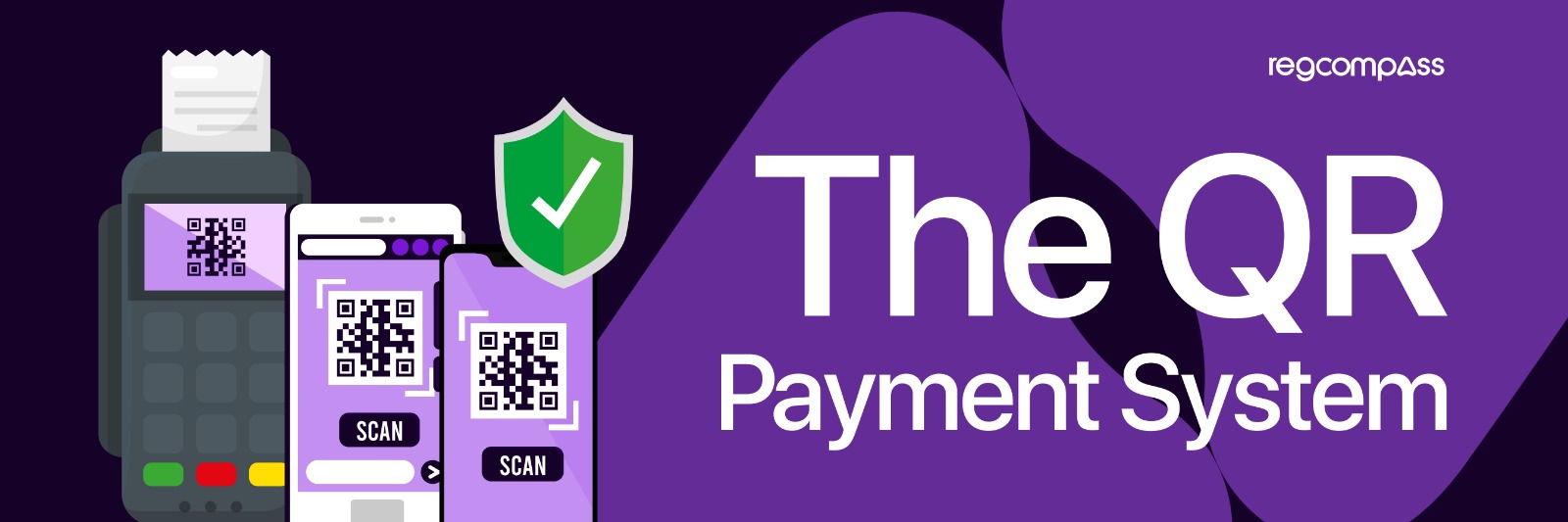
One other notable requirement for the specification of QR code payment is that it must support account, wallet, card and token based QR Code Operations.
Additionally, this framework only allows for Merchant-presented mode specification. In this mode, Merchants present the codes of the customers to accept. It is particularly important in an emerging market like Nigeria because it makes the payment system cheaper for the merchants and makes it easier for small businesses to
use. Unlike in the case of Customer presented Mode, Merchants can easily generate codes on their smart devices instead of buying high end equipment.
Participants and their Responsibilities in QR Code Payments in Nigeria
The participants envisaged under this framework are the Merchants; who sell the goods, the customers; who buy goods from merchants, the issuer
I. Merchants: A person or company that sells or offers goods or services. Examples of merchants are Pharmacies, Supermarkets, Restaurants, Hospitals, Resorts e.t.c. Their roles are to;
- Use and display only approved QR Codes in Nigeria;
- Comply with service agreements executed with the acquirer;
- Report suspicious use of QR Codes for payments to the acquirer;
- Be guided by the extant CBN Guidelines on Electronic Payments Channels in Nigeria, Guide to charges by banks, other financial and non-bank financial institutions, and other applicable regulation as may be issued by the Bank amongst others.
II. Customers: Persons who buy goods or services from a Merchant. Example of a Customer is Adewale(customer) who buys pain relief tablets from Medplus (Merchant). Their responsibilities are;
- Use QR Code Payments applications availed by the issuer and for intended purpose without modifications, at merchant locations/websites/applications;
- Consumer shall adhere to all minimum security guidelines as stipulated by the issuer;
- Report inappropriate/unauthorised QR Code Payment transactions on their accounts/wallets.
III. Issuers: These are Banks, Mobile Money Operators (MMOs) and other Financial Institutions that provide customers with credit cards for payment transactions. They are required to;
- Provide QR Code Payment application to customers upon request and activation by customer;
- Execute service agreement with their customers;
- Comply with Card Scheme Rules (Where applicable)
- Determine and agree appropriate transaction limits with customers for QR Code Payments in conformity and compliance with requirements of QR Code regulations;
- Provide adequate training, support and security guidelines to customers on the use of QR code for payments;
- Be guided by the extant CBN guidelines on Electronic Payments Channels in Nigeria, Guide to charges by banks, other financial and non-bank financial institutions, and other applicable regulation as may be issued by the Bank amongst other responsibilities.
IV. Acquirers: They are financial institutions or banks that processes credit or debit electronic payments on behalf of the merchants. This implies that they receive payments made by the merchants’ customers from the issuers. They have the responsibility to;
- Execute services agreement with merchants;
- Determine and agree appropriate transaction limits with merchants for accepting QR Code Payments based on its risk profile assessment of the merchant;
- Ensure appropriate configurations and use of QR Codes at Merchant Location/website/applications in conformity and compliance with requirements of QR Scheme(s) and QR Code regulations;
- Ensure that appropriate security protocols are applied.
- Give merchants value for QR Code transaction within T+1 or as may be agreed with the merchant;
- Ensure that hardware, software, protocols used for QR Code for payments are in conformity with the requirements of operations of QR Code payments regulations amongst others.
V. Other Payments Service Providers: These include switches and Payment Solutions Service Providers (Remita, Paystack, VoguePay, Flutterwave e.t.c). They are to provide;
- Support processing and settlement for all issuers and acquirers;
- Facilitate interoperability of QR Codes Payments for all issuers and acquirers;
- Ensure full compliance with this framework and other extant guidelines on
- electronic payments and transaction processing.
Interoperability
All issuers, acquirers, switches, processors and other participants in QR payments in Nigeria shall ensure full interoperability of QR Code Schemes in Nigeria. This entails routing transactions between different providers making financial services more convenient and encourages customers to transact more. Customers do not have to worry if the merchant’s acquirer and its issuer are the same, interoperability makes this possible.
Risk Management and Compliance
The operations of QR Code Payments in Nigeria are guided by the prescribed risk management principles. They include;
- Issuers and acquirers shall clearly define risk management policy and guidelines for the operation of the QR Code Scheme. The risk management guidelines shall include detailed stipulation of the responsibilities of all participants for managing risk;
- QR Codes shall, at a minimum, be encrypted (AES) and /or signed;
- QR Codes Payments applications, updates and patches shall be duly certified by the Payment Terminal Service Aggregator (PTSA);
- Issuers and Acquirers, shall agree minimum due diligence guidance for merchant on-boarding without prejudice to the KYC/AML requirements of the Bank;
- Issuers and Acquirers shall ensure that only PTSA certified QR Code shall be utilised;
- Issuers shall have the overall responsibilities for managing fraud risk and shall coordinate all participants towards managing fraud in its scheme among other principles.
Dispute Resolution and Sanctions for infringement
A complaint by a consumer is resolved in accordance with the CBN Consumer Protection Regulation. All parties are required to comply with the provisions of this framework and relevant guidelines of the CBN. Further to which, appropriate sanctions are applied by the Bank to parties that fail to comply accordingly.
Conclusion
QR Code payments system is very secure because any data exchanged or transferred is encrypted making the payment foolproof secure. It’s a welcome development because of its ease, simplicity and security in making bill payments. Businesses will have to embrace this development to retain their customers and provide fast and
secure services to them. It is important to note that this innovation is not a new idea, it is widely used in the US, Australia, Switzerland among others. Its impact on consumers, merchants and the financial system in Nigeria generally is however not yet certain.